01
Speak like an owner
Opening hours, photos and menus—not commits, builds and branches.
A mobile experience for non-technical owners to request, review, publish, and reverse website changes—with the ease of sending a message.
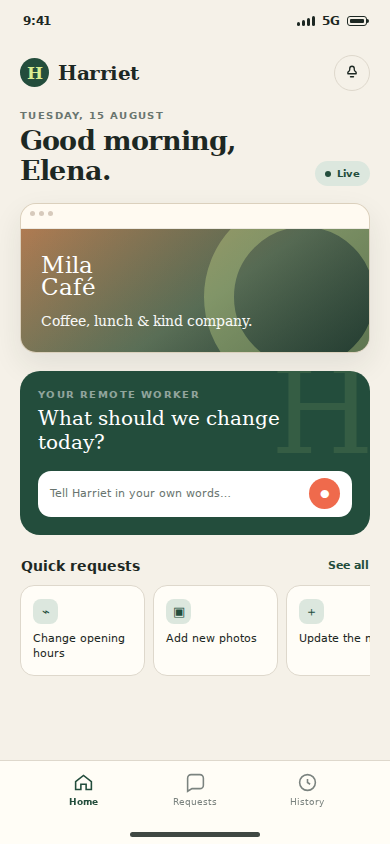
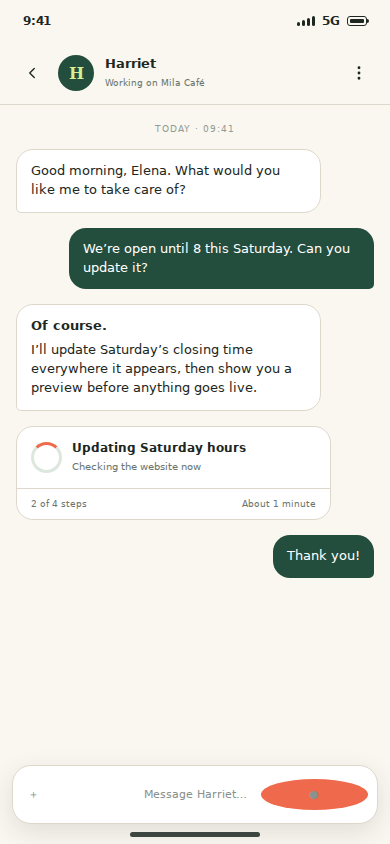
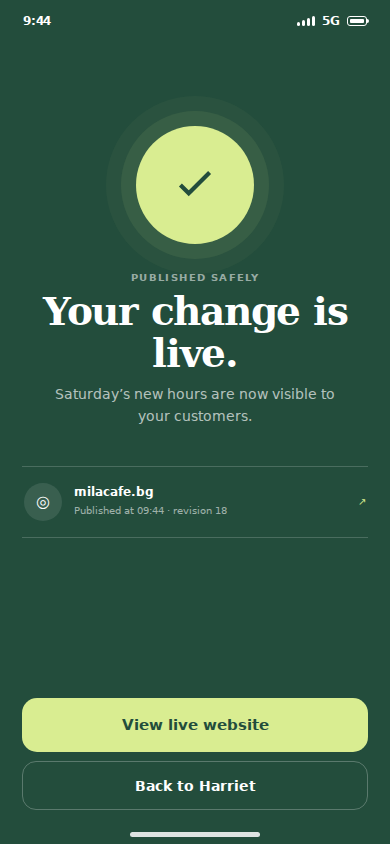
Harriet should feel like a calm, capable employee who already knows the website. The owner describes an outcome; Harriet handles the implementation and returns with something concrete to approve.
Opening hours, photos and menus—not commits, builds and branches.
A visual result comes before implementation details or technical logs.
Harriet prepares. The owner previews and explicitly publishes.
Plain-language history makes restoration feel safe and ordinary.
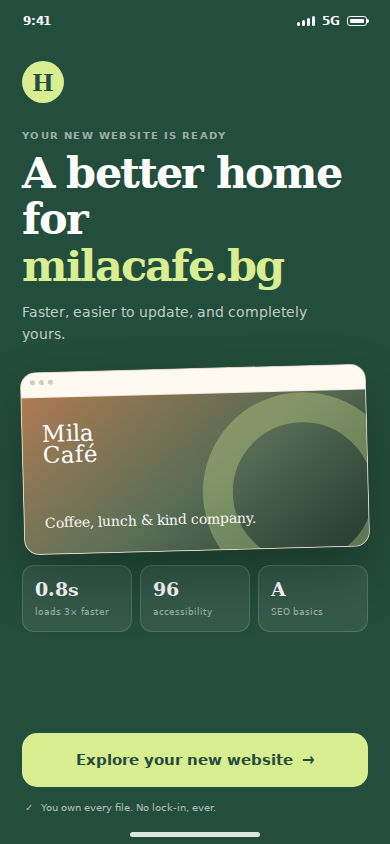
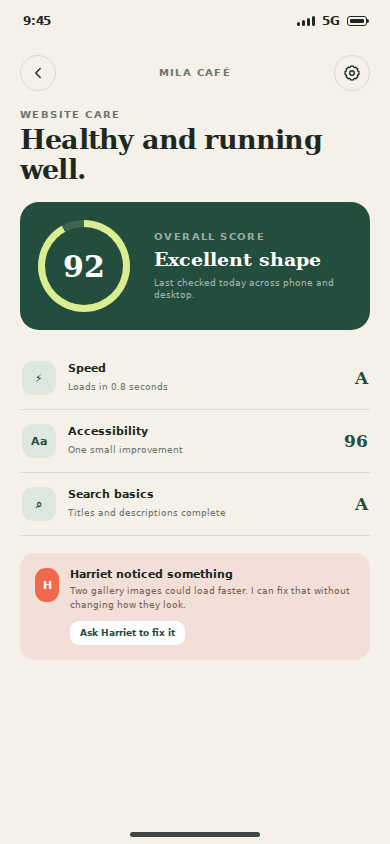
The first screen begins with the migrated result—not account configuration. It makes speed, accessibility and ownership legible in seconds, matching the sales promise.
The home screen has one dominant action: tell Harriet what changed. Common tasks reduce blank-page anxiety, while conversation supports nuance without exposing coding-agent mechanics.
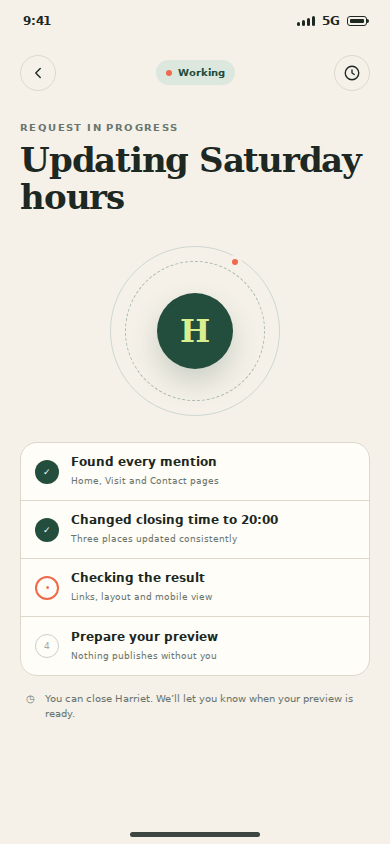
Owners see outcome-oriented steps: what Harriet found, changed and checked. They can leave the app and return when the preview is ready.
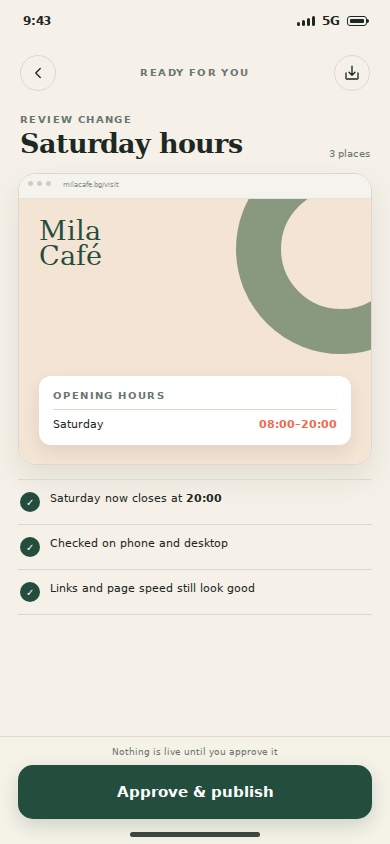
The preview makes the proposed result concrete. A short quality summary supports trust, while a single deliberate publish action preserves the owner’s control.
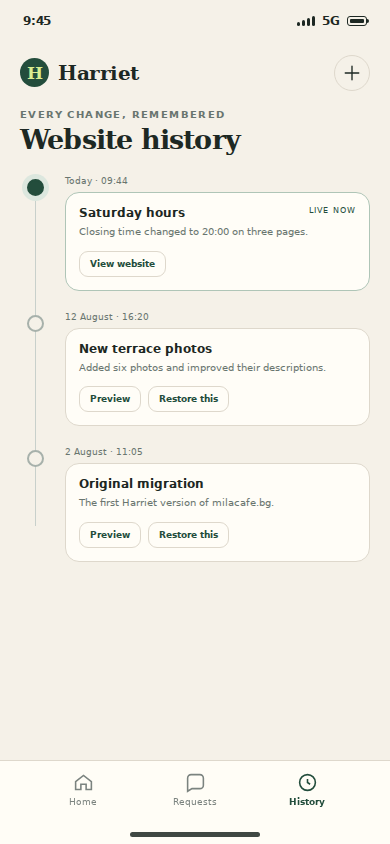
History is written in the owner’s language, not Git terminology. Website Care turns Harriet from a reactive editor into a useful ongoing subscription—with improvements that remain optional.
Harriet’s technical differentiators—isolated agents, Git history, customer-owned hosting and portable source—become understandable customer promises.
Each customer’s agent and website run in an isolated workspace.
Production changes require a deliberate action from an authorized owner.
Every change is stored and an earlier revision can be restored.
Source and hosting belong to the customer and survive Harriet.
Avoid the temptation to mirror every backend object. The first app can remain extremely small.
Will owners trust a conversational request without seeing technical details?
Is a visual preview plus plain-language summary enough confidence to publish?
Do voice and quick requests reduce anxiety for people unfamiliar with AI?
Does website health create recurring value beyond occasional content updates?
Can customers understand revision restoration without Git vocabulary?
Which fixed interface terms need different phrasing in Bulgarian and German?